JUDICIAL VETOES: DECISION-MAKING ON MIXED SELECTION CONSTITUTIONAL COURTS

Vol. 36 No. 01 (May 2026) pp. 10-11

JUDICIAL VETOES: DECISION-MAKING ON MIXED SELECTION CONSTITUTIONAL COURTS, by Lydia Tiede. Cambridge: Cambridge University Press, 2022. 324pp. Hardback $117.00. ISBN 9781316512319.

Reviewed by Amanda Driscoll, Department of Political Science, Florida State University. Email: adriscoll@fsu.edu.

The process by which judicial authorities are selected sets the stage for judicial autonomy and institutional independence. Institutional rules that govern judicial selection – judicial nominations versus direct election, for example – have long been appreciated as an important factor in judicial decision-making, sentencing, and related judicial behaviors. In her important new book Judicial Vetoes: Decision-Making on Mixed Selection Constitutional Courts, Tiede makes a critical contribution to our understanding of these effects in constitutional courts, demonstrating that selection modality is a stronger predictor of both judicial voting and case outcomes than partisanship or ideological leaning in the constitutional courts of Colombia and Chile.

Most constitutional courts around the world disperse the authority to select constitutional jurists amongst several possible actors. Executive branch authorities, legislative majorities, judicial actors, legal system representatives such as the Ombudsman or Attorneys General, members of civil society or the legal profession all may play a role in the selection or appointment of jurists on mixed-selection constitutional courts. The resulting deliberative body then reflects a confluence of jurists who vary in their training, expertise, experience with and allegiance to the selector to whom they owe their nomination. Allegiances thus divided, these constitutional bodies are ensured their independence, such that they might not be beholden to or captured by any external institution or actor.

Tiede meticulously disassembles the historic and legislative record to trace the origins of the mixed-selection system in Colombia and Chile. She shows that the designers opted for a mixed system to both advance their own institutional interests while also dividing said influence across various loci of power. The actors who vet potential judicial nominees do so with an eye for their own institutional priorities and select adjudicators who will best advance the organizational interest while seated on the bench. Prospective judges, for their part, understand these considerations and behave accordingly both to secure the nomination and then advance said interests while in office, cultivating a reputation that will serve their professional career beyond their term on the constitutional court.

Critically, Tiede theorizes these effects at both the level of the judge and in its aggregate, also considering the possible effects that nominating institutions might have for case disposition at the level of both the panel and the Court. Considering only case outcomes would mask the effect of individual judges’ calculus and votes. Conversely, an exclusive accounting of judicial voting without consideration of final decision-making would obscure the effect of facets of collective decision-making (e.g., panel effects and quorum rules). Both can be decisive for outcomes of constitutional adjudication. The mix of selectorate judges impacts not only how individual judges decide cases but is associated with the frequency of constitutional vetoes in the context of abstract review.

HOW CONSTITUTIONAL RIGHTS MATTER

Vol. 36 No. 01 (May 2026) pp. 5-9

HOW CONSTITUTIONAL RIGHTS MATTER by Adam Chilton and Mila Versteeg. New York, NY: Oxford University Press, 2020. 396 pp. Hardcover $160.00. ISBN 978-0190871451.

Reviewed by Susan Achury, Department of Political Science, Lycoming College. Email: achury@lycoming.edu.

The language of constitutional rights has profoundly shaped global politics. The U.S. Supreme Court’s recent decision in Dobbs v. Jackson Women’s Health Organization (2022), which reversed Roe v. Wade (1973), has reinvigorated debates about the value of constitutionalizing rights. In the United States, advocates and scholars have argued that only formal constitutional entrenchment can secure abortion rights against future legislative erosion (Geiger 2023). Yet across Latin America, feminist movements have secured constitutional protections for abortion access and state obligations to address gender-based violence and feminicide, against similar anti-rights agendas that continue to contest these gains, although the gap between constitutional text and lived experience for women remains wide. While France has led the list of countries constitutionalizing the right to abortion, the question remains whether it is necessary to constitutionalize rights to secure their protection (Bottini et al. 2024). This question is at the center of politics beyond the feminist debates, including different political agendas, for example, those related to global movements addressing climate change and environmental rights, proposing the right to a clean, healthy, and sustainable environment, or recognizing nature as a constitutional subject, as well as the digital and technological rights, and the rights to truth, justice, and reparation.

How Constitutional Rights Matter, by Adam Chilton and Mila Versteeg, has become a cornerstone work in comparative law research. In the context of a remarkable global expansion of constitutional rights, with the average number of enumerated rights per constitution doubling between 1946 and 2016, the book presents a sobering finding: the constitutionalization of rights does not reliably produce greater respect for those rights in practice. Rather than treating this gap as an anomaly, Chilton and Versteeg treat it as their analytical baseline, shifting the question from whether constitutional rights matter to which rights matter and through what mechanism. The book employs a quantitative approach to examine this question, contributing significantly to understanding the challenges inherent in assessing the impact of constitutional rights, particularly on the gap between de jure protections and de facto outcomes.

How Constitutional Rights Matter examines eight constitutional rights—freedom of speech, prohibition of torture, freedom of movement, right to education, right to health care, freedom of religion, right to unionize, and right to establish political parties, categorizing them into individual and organizational rights, with the latter proving substantially harder for governments to encroach upon. Building on over eight years of research, the book addresses significant empirical challenges, providing a robust framework for future studies and prompting a critical examination of the effectiveness of constitutional frameworks.

IN HER OWN NAME: THE POLITICS OF WOMEN’S RIGHTS BEFORE SUFFRAGE

Vol. 36 No. 01 (May 2026) pp. 2-4

IN HER OWN NAME: THE POLITICS OF WOMEN’S RIGHTS BEFORE SUFFRAGE by Sara Chatfield. New York: Columbia University Press, 2023. pp.256. Paperback $30.00. ISBN: 9780231199674. Hardcover $120. ISBN: 9780231199667.

Reviewed by Kathleen Sullivan. Department of Political Science, Ohio University. Email: sullivak@ohio.edu

In In Her Own Name, Sara Chatfield provides a comprehensive account of married women’s property acts from 1835 to 1920, offering wider lessons for the field of law and politics. At first glance, statutes and state constitutional provisions that allowed married women to exercise economic rights seem to present a classic story of reform. The impetus for these acts, however, was not to liberate women from coverture. The acts were not even a response to women’s rights activism. A simple story of hierarchy fails to capture this experience of women’s inequality and reform.

Employing a multimethod approach, Chatfield does a meticulous job of identifying when states or territories recognized particular rights. Rather than rely on treatises or other secondhand sources, Chatfield returns to state statute books and state constitutional conventions to identify when particular states passed a law that secured a married woman’s property from paying her husband’s debt, or allowed her to control her own earnings or separate estate, to be a sole trader, or to pass along property in her will. Such rights were passed piecemeal, state by state (and territory), between 1835 and 1920. Chatfield is interested in the diffusion of these statutes and constitutional provisions. To test how states borrowed statutory and constitutional language from other states, Chatfield ran a text analysis using plagiarism software to track language and policy adoption across states (Methods Appendix). An event history analysis distinguishes among states, explaining why states passed particular statutes when they did (p. 134). This is a methodological approach never before used in historical studies of married women’s property acts. In Her Own Name will be the go-to book for a comprehensive account of married women’s property acts.

While In Her Own Name joins women’s history scholarship on married women’s property acts, its approach elicits even more contributions to current political science work in law and American political development. The motives for these statutes were seldom for the betterment of married women themselves. The first wave women’s movement soon followed the first state Married Women’s Property Act, peaking in 1920 with the Nineteenth Amendment. Yet married women’s property rights largely were not granted in response to the mobilization of the women’s movement. Instead, state legislatures and constitutional conventions had other reasons for granting those rights. Those other reasons invite us to contend with the role of liberalism in American political development. Rights are not always about improving the conditions of subjugated or excluded people. Rights can be a tool for state actors to achieve other purposes. Chatfield references the scholarship that has reckoned with the limits of rights and the instrumentality of rights in her conclusion, placing her study into analyses of rights in critical race theory, Mary Dudziak’s account (2011) of Cold War civil rights, and other key studies (pp. 171-172). Adding married women’s property acts to this critical scholarship shows that the restricting and granting of rights was a tool for political institutions to accomplish purposes other than liberating women from previous conditions of oppression. Acknowledging rights-restriction and rights-granting as a tool of institutions rather than as an outcome of reform reveals the work that rights can do for the state.

LAW AND POLITICS BOOK REVIEW, VOL. 36, NO. 01, PREFACE

Vol. 36 No. 01 (May 2026) pp. 1

Preface – New Volume, New Issue, New Editors!

Greetings,

Along with the newest volume (36) and issue (01), the Law and Politics Book Review can introduce its newest co-editors: Hayley Munir and Michael Catalano. Dr. Munir is an Assistant Professor in the Criminal Justice Sciences Department at Illinois State University. Dr. Catalano is an Assistant Professor of Political Science at the University of Scranton. We aim to carry on the tremendous legacy of service and scholarship left by our predecessors. A special thank you to the outgoing co-editors of the Law and Politics Book ReviewDr. Monica Lineberger and Dr. Jolly Emrey – for their years of service.

In this issue, we present reviews of three books tied together under the common theme of courts and the protection of individual rights. First, Kathleen Sullivan, of Ohio University, reviews IN HER OWN NAME: THE POLITICS OF WOMEN’S RIGHTS BEFORE SUFFRAGE by Sara Chatfield. Sullivan’s review emphasizes the “meticulous job” Chatfield does in explaining the economic rights of women at the subnational level in the United States from the antebellum period through World War I.

Next, Susan Achury (Lycoming College) reviews HOW CONSTITUTIONAL RIGHTS MATTER by Adam Chilton and Mila Versteeg. Achury dissects the main point of Chilton and Versteeg’s work, which argues that codifying rights into constitutions does not guarantee that those rights will gain support from political elite and policymakers.

Finally, Amanda Driscoll (Florida State University) reviews JUDICIAL VETOES: DECISION-MAKING ON MIXED SELECTION CONSTITUTIONAL COURTS, by Lydia Tiede. Driscoll contends with Tiede’s explanation defining the balance between the impact of judicial selection and ideology and partisanship on judicial behavior.

Enjoy more of what the Law and Politics Book Review has to offer by visiting our website at lpbr.net. You can also contact us via email here to recommend a book to review, volunteer as a book reviewer, and pose any other inquiries.


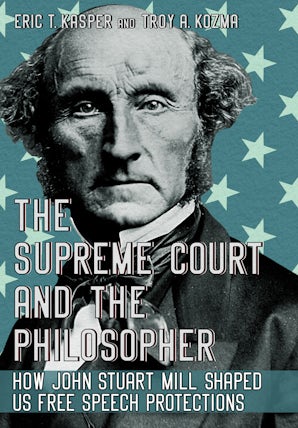
THE SUPREME COURT AND THE PHILOSOPHER: HOW JOHN STUART MILL SHAPED U.S. FREE SPEECH PROTECTIONS

Vol. 35 No. 02 (October 2025) pp. 20-24
THE SUPREME COURT AND THE PHILOSOPHER: HOW JOHN STUART MILL SHAPED U.S. FREE SPEECH PROTECTIONS, by Eric Kasper and Troy Kozma. Ithaca: Northern Illinois University Press, an imprint of Cornell University Press, 2024. 288pp. Cloth $44.95. ISBN: 97815017745150.

Reviewed by Cary Federman. Department of Justice Studies. Montclair State University. Email: federmanc@montclair.edu.

In 1918, Congress passed the Sedition Act, empowering federal authorities to arrest those who sought to “incite, provoke and encourage resistance to the United States.” In due course, the government convicted five men, including Jacob Abrams, for distributing leaflets supporting a general strike, Russian communism, and Marxist calls for working-class unity. The majority opinion in Abrams v. U.S. (1919) concludes with two points: (1) Congress has the power to pass such legislation, and (2) the jury acted according to the law. Justice Oliver Wendell Holmes’s dissent, however, stands out for more than its florid language. Earlier that year, Holmes authored three unanimous opinions on the same day — Schenck v. U.S. (1919), Frohwerk v. U.S. (1919), and Debs v. U.S. (1919) — each upholding convictions of war critics under the 1917 Espionage Act. What changed?

According to Eric Kasper and Troy Kozma, the former a political scientist and the latter a philosophy professor, Holmes applied a “Millian analysis” (p. 49) absent from the opinions in Abrams, Schenck, Frohwerk, and Debs. Millian analysis is the application of John Stuart Mill’s “harm principle” to speech cases plus Mill’s idea that no one person or group of people can claim certainty over an idea. Holmes wrote: “the best test of truth is the power of the thought to get itself accepted in the competition of the market.” The “marketplace of ideas” metaphor is a modified version of Mill’s epistemological uncertainty principle, which states that because “[w]e can never be sure that the opinion we are endeavoring to stifle is a wrong opinion” (Mill 1978, 16), a “civilized community” (Mill 1978, 9) must tolerate dissenting opinions. Presuming America to be that kind of community, Holmes argued that the First Amendment must allow each individual the right to seek truth. This, Holmes wrote, “is the theory of our Constitution.”

In The Supreme Court and the Philosopher, Kasper and Kozma set out to examine nearly every free speech case the Supreme Court has decided since the end of World War I through a Millian lens. The book has nine chapters, plus an introduction and a conclusion. Chapter Two covers cases decided prior to Holmes’s embrace of Mill’s ideas in On Liberty. This was not a Millian era. Because the Supreme Court did not yet apply

BIBLICAL JUDGMENTS: NEW LEGAL READINGS IN THE HEBREW BIBLE

Vol. 35 No. 02 (October 2025) pp. 17-19

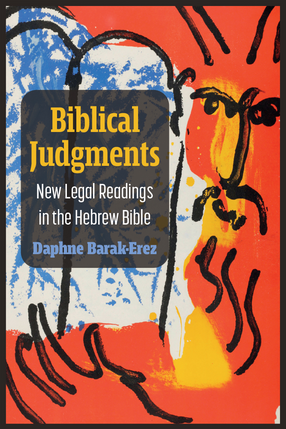
BIBLICAL JUDGMENTS: NEW LEGAL READINGS IN THE HEBREW BIBLE, by Daphne Barak-Erez. Ann Arbor: University of Michigan Press, 2024. Hardback. ISBN 978-0-472-07658-1. Paperback. 978-0-472-05658-3; E-book, ISBN 978-472-22131-8. $34.95.

Reviewed by Malcolm Feeley. Claire Sanders Clements Professor Emeritus, School of Law, University of California at Berkeley.

The author, a former professor and dean at the Tel Aviv University Law School and since 2012, a Justice on the Israeli Supreme Court, has written a valuable book on law and the Hebrew Bible (i.e. the Old Testament, consisting of the Five Books of Moses, Psalms, Prophets, and the Kings). Contrary to other studies that compare Jewish law as elaborated and debated in the Talmud with contemporary legal issues (Dorff and Rosett, 2012), Justice Barak-Erez draws on the familiar disputes and controversies recorded in the Bible, and connects them to modern constitutional, governmental, legal, and regulatory issues. (And I should note, in her English language edition, her comparisons are drawn from familiar controversies in contemporary common law countries.) Her purpose is decidedly not to argue, “nothing changes.” Indeed, she points out vast differences between then and now. But she does emphasize that the controversies that are reported in the Bible have their counterparts today, and the ways issues were framed long ago also frames similar contemporary issues. Much is new, but the principles invoked are enduring—they respond to universal concerns about good government, judging, governing, evidence law and procedure, the legal process, and principles underlying substantive laws.

The book is divided into six parts, Law and Government; Judges and Judging; Human Rights and Social Justice; Criminal Law; Private Law; Family and Inheritance. Each Part has from fourteen to thirty-four vignettes or case studies that recount a biblical controversy, highlight the legal issue underlying it, and reflect on similar issues in contemporary law. Each discussion is no more than two or three pages long. The author sets the scene, presents the account, explains the controversy, identifies underlying principles that frame the matter, reports on its resolution, and then turns to reflect on similar contemporary issues.

Part I, Law and Government, covers constructing a constitution, separation of powers, limits of majority rule, leadership and opposition, donning the veil of ignorance, forms of interpretation, regulation, and criminal law. It is difficult to choose my favorite chapter,

COURTS UNMASKED: CIVIL LEGAL SYSTEM REFORM AND COVID-19

Vol. 35 No. 02 (October 2025) pp. 14-16

COURTS UNMASKED:CIVIL LEGAL SYSTEM REFORM AND COVID-19, Alyx Mark. Lawrence, KS: University Press of Kansas, 2025. 200pp. Cloth $69.99. ISBN: 9780700638253. Paper $24.99. ISBN: 9780700638260. E-Book $24.99. ISBN: 9780700638277.

Reviewed by Shane A. Gleason Public Policy & Law Program, Trinity College. Email: shane.gleason@trincoll.edu.

Alyx Mark’s Courts Unmasked: Civil Legal System Reform and COVID-19 begins with a seemingly simple research question: How did state courts respond to COVID-19? In answering this question, Mark moves beyond judicial politics’ historical outcomes and justice-vote focus. Rather, she draws on the judicial administration literature to focus on how the pandemic altered the civil legal system. The substantive analysis explores a plethora of legal actors ranging from local court administrators to state supreme courts. The result is a rich and multifaceted account of not only how courts responded to the pandemic, but also the institutional constraints, processes, and perceptions that led there. The mixed-method analysis occurs at both a sweeping state and nuanced local level. Ultimately, Mark presents a compelling narrative that is about far more than the pandemic; it is about how state supreme courts direct their local courts, how courts respond to changing contexts, and rich institutional variation between court systems. This book should become essential reading for anyone interested in state courts specifically or the operation of legal institutions broadly.

Using the pandemic as a vehicle for analysis, Mark explores civil legal system reform through a twofold framework. First, she argues state supreme court directives to their inferior courts during the pandemic are a function of how centralized judicial administration is in the state. This may be the difference between a state supreme court telling a lower court what to do or encouraging them to do something. Second, Mark explores how local legal actors perceive those directives and the extent to which they comply with apex court directives. While the degree of centralization certainly matters in local response, so too does the local context and the extent to which lower court actors feel buy-in with the high court’s process. While the theoretical framework is itself quite parsimonious, it underscores institutional variation between states is more complex than the presence of an intermediate court of appeals, selection mechanism, professionalism, or any other institutional feature highlighted in previous work. Rather, by drawing together scholarship from the hereunto disparate fields of judicial politics and judicial administration, Mark demonstrates institutional variation occurs on a myriad of levels which are consequential for courts’ operation.

Perhaps the most remarkable thing about this book, and one that should be more prominent, is the scope of the data. Within judicial politics data is often conceived of as opinions or perhaps briefs. Mark focuses on the administrative process. This results in multi-modal data

JUDICALIZING EVERYTHING? THE CLASH OF CONSTITUTIONALISMS IN CANADA, NEW ZEALAND, AND THE UNITED KINGDOM

Vol. 35, No. 01 (March 2025) pp. 11-13

JUDICALIZING EVERYTHING? THE CLASH OF CONSTITUTIONALISMS IN CANADA, NEW ZEALAND, AND THE UNITED KINGDOM, by Mark S. Harding. Toronto: University of Toronto Press, 2022. 181 pp. Cloth $39.95. ISBN 9781487528485. Ebook $42.95. ISBN: 9781487528508.

Reviewed by Christopher Manfredi. Department of Political Science. McGill University. Email: christopher.manfredi@mcgill.ca.

Mark Harding has written a short and readable book that applies a comparative lens to two separate debates within the literature on judicial politics and constitutionalism. The first debate, which occupies most of Harding’s analysis, is that between political and legal constitutionalism. The central question of this debate is whether rights are better protected by political institutions (political constitutionalism) or through development and application by the judiciary (legal constitutionalism). The second debate is between liberal and post-liberal constitutionalism, with the former conceptualizing constitutional rules as largely protecting individuals from government overreach, and the latter understanding constitutions as imposing positive obligations on government to regulate the private sphere to achieve a broader conception of liberty. Harding’s book examines how these debates have played out within the final appellate courts of Canada, New Zealand, and the United Kingdom.

In the interest of full disclosure, I should recognize my own biases at the outset of this review. My scholarship places me squarely in the camp of political constitutionalists who support liberal constitutionalism. However, in the context of the Westminster parliamentary systems that are the subject of Harding’s book, this positioning should not be misunderstood as nostalgia for a bygone era of parliamentary supremacy. Canada’s 1982 constitution clearly replaced parliamentary supremacy with constitutional supremacy. In my view, the debate between political and legal constitutionalism in Canada is not about preserving parliamentary supremacy (as it might be in New Zealand or the United Kingdom), it is about identifying the appropriate institutional locus for constitutional interpretation. Legal constitutionalism places this locus clearly in the courts to the extent that the judiciary enjoys a monopoly on constitutional interpretation, especially with respect to rights. A post-1982 Canadian political constitutionalist recognizes a new critical role for judicial review but also recognizes a coordinate role for political institutions in constructing constitutional meaning.

It should also be noted that, although legal constitutionalism has become the dominant perspective among post-liberal constitutionalists in Canada, this was not always the case. Indeed, many of the early critics of entrenching rights in the Canadian constitution—like Andrew Petter, Allan Hutchinson, and Michael Mandel—were post-liberal constitutionalists highly sceptical of legal constitutionalism (Hutchinson and Petter 1988, Mandel 1989). They saw political institutions as the principal source of progressive social and economic policies, and courts as the principal obstacle to those policies. Their position was grounded in the U.S. experience, where the U.S. Supreme Court’s progressive record was relatively short, spanning a 20-year period from Brown v. Bd. of Ed. (1954) to Roe v. Wade (1973). It also found support in early Canadian Charter of Rights cases, especially involving organized labour. Whether the post-liberal orientation of Canadian legal constitutionalism is now permanent is an open question.

THE SLOW VIOLENCE OF IMMIGRATION COURT: PROCEDURAL JUSTICE ON TRIAL

Vol. 35 No. 01 (March 2025) pp. 8-10

THE SLOW VIOLENCE OF IMMIGRATION COURT: PROCEDURAL JUSTICE ON TRIAL, by Maya P. Barak. New York University Press, 2023. pp. 240. Cloth $89.00. ISBN: 9781479821037. Paper $30.00. ISBN: 9781479821044.

Reviewed by: Luzmarina García. Department of Political Science. Florida Atlantic University. Email: luzmarinagarcia@fau.edu.


The Slow Violence of Immigration Court: Procedural Justice on Trial by Maya Pagni Barak examines the paradoxes that exist in plain view in both the American legal system and society at-large. This work lays out, at last, a comprehensive timeline in the immigration court process, laying out the steppingstones and the issues with each stage, noting institutional procedures and objectives, and examining enlightening interviews with immigration attorneys and moving narratives of immigrants that are/have gone through the courts.

The author, an Associate Professor of Criminal Justice Studies at the University of Michigan–Dearborn, challenges the prevailing belief in the effectiveness of procedural justice within an unjust immigration system. Barak argues that conventional approaches, such as improving due process and bureaucratic changes, fail to address systemic issues and do little to increase immigrant compliance with deportation orders. Barak conducted formal, in-depth interviews with 36 individuals between 2014 and 2016, comprised of Guatemalan, Honduran, and Salvadoran immigrants in deportation proceedings, their family members, and licensed immigration attorneys. The study also involved visits to two East Coast immigration courts, where Barak observed numerous deportation hearings. The author advocates for a shift away from strategies emphasizing the appearance of justice, urging a focus on genuine justice to promote collective well-being and human dignity in addressing the flaws of the immigration court and system.

In Barak’s work, I identified paradoxes that are vital for understanding how immigration courts exercise a “slow violence” (Pagni Barak 2023, p. 152). First, immigrants express positive opinions of the court even as they are going through its procedures, while attorneys who work within the courts express negative opinions of the process, resources, and judges’ behavior. Second, the ideal of due process versus the reality that is exercised in immigration courts is a stark contrast. Issues such as respondent language proficiency, translation quality, and video conferencing issues, which are only a few of the problems in the process, do not allow for a fair day in court. Next, there is the conflicting legal consciousness that is developed in an environment of both accurate legal information and fallacies. Legal consciousness refers to the “ways people understand and use the law,” including “the way people conceive of the ‘natural’ and normal way of doing things, their habitual patterns of talk and action, and their commonsense understanding of the world” (Merry 1990, p. 5). Barak describes how immigrants develop legal consciousness through dual socialization—in their countries of origin and in the U.S. Immigrants, therefore, bring formal knowledge of the legal systems in their origin countries but learn about American law through family stories, friends, and media. Barak also presents the paradox of immigrants’ admiration of the rule of law versus their proclivity for following the rules. Essentially, the promise of rule of law is a motivating factor for many immigrants to come to the U.S., but this admiration turns to cynicism if there is a deportation ruling in their own case. Thus, immigration law is seen as inadequate for immigrant needs in the minds of many interviewees, which causes them to justify non-compliance with adverse rulings.

RESPONSIVE JUDICIAL REVIEW: DEMOCRACY AND DYSFUNCTION IN THE MODERN AGE

Vol. 35, No. 01 (March 2025) pp. 1-7

RESPONSIVE JUDICIAL REVIEW: DEMOCRACY AND DYSFUNCTION IN THE MODERN AGE, by Rosalind Dixon. Oxford University Press, 2023. pp. 295. Cloth $105.00. ISBN: 978-0-19-286577-9.

Reviewed by: Mark Rush. Department of Politics. Washington and Lee University. Email: rushm@wlu.edu.

In Responsive Judicial Review, Rosalind Dixon seeks to re-establish or, at least, re-strengthen, the case for judicial activism and review. In so doing, she takes the reader on a tightly but elegantly argued story that addresses arguments against judicial activism, the role of courts in a democracy, and the uncertainty posed by contemporary debates about whether democracy is backsliding or evolving (Carothers and Press; Cianetti and Hanley). She weaves her narrative by drawing upon the vision of a representation-enforcing judicial review set forth by John Hart Ely. She sees this role as one that best manages the countermajoritarian tension that inheres in judicial review. Yet, her vision is grounded on the premise that democracy is now manifesting myriad symptoms of dysfunction. As a result, she regards the judiciary as perhaps the one institution that can perhaps diagnose and respond to the causes of that dysfunction. Thus, she seeks to design a “responsive” theory of judicial review that is informed by “a concern about the degree to which, absent judicial intervention, various sources of democratic dysfunction are likely to be reversible by future legislative or executive action” (p. 6).

Yet, courts must remedy democratic dysfunction while preserving the dynamism and responsiveness in the other branches of government. In this respect, Dixon sets a perilous course between the Scylla of debilitating democracy as a result of too much reliance on judicial remedies and the Charybdis of letting dysfunctional democracy careen towards a dystopian post-liberal or post-democratic alternative.

In this spirit, Dixon calls upon Ely’s spirit in order to update it.
As constitutional scholars in the 2020s, the challenge we face is to do justice to the intellectual inheritance Ely has given us, but in a way that is fit for purpose in a truly globalized constitutional universe, where the threats to democracy are manifold and increasing by the day. In doing so, our task is also to develop a theory of judicial review that responds to both the promise of courts as potential guardians of democracy and democratic values, and the inevitable limits on courts’ capacity and legitimacy in performing this role (p. 15).
With this statement, Dixon essentially offers the reader two books. One is on the role of courts in a democracy; the other is a book about what democracy is and how it is evolving. Dixon therefore offers an important opportunity to update Ely’s American-centered vision and theory of judicial review. Yet, by acknowledging the need to address the role of courts in a correspondingly broader, more global, and evolving notion of democracy, Dixon demonstrates that her task is quite challenging. To the extent that democracy is that much more complex than the vision underpinning Ely’s analysis, and to the extent that democracy is an increasingly contested concept, divining a role for courts and judicial review is that much more of a challenge. Yet, she meets it with great success.

THE SECOND FOUNDING: AN INTRODUCTION TO THE FOURTEENTH AMENDMENT

Vol. 34 No. 04 (July 2024) pp. 44-47

THE SECOND FOUNDING: AN INTRODUCTION TO THE FOURTEENTH AMENDMENT, by Ilan Wurman. New York: Cambridge University Press, 2020. pp188. Paperback $20.99. ISBN: 978-1-108-82395-1. Online $20.99 ISBN: 978-1-108-91495-6.

Reviewed by Staci L. Beavers. Department of Political Science, California State University San Marcos. Email: sbeavers@csusm.edu.

While perhaps not a sequel in Marvel fans’ sense of the term, Ilan Wurman’s The Second Founding: An Introduction To The Fourteenth Amendment follows up on his first book, published in 2017. Legal scholar Wurman wrote A Debt Against The Living: An Introduction To Originalism “to introduce originalism to a broader audience” through acquainting readers with prominent originalist-oriented scholarship (p. 4). This time Wurman turns the reader’s attention to originalist debates over the Fourteenth Amendment to “explain[] the debates, provide[] the best arguments of the various sides, and then offer[] [his] own position” (p. 4) on the original meaning of critical components within Section 1 of the amendment. More broadly, he aspires to demonstrate that, given its emphasis on non-discrimination, “[t]he original meaning of the 14th amendment is not scary” (p. 144). While his success with this latter goal is debatable, Wurman pulls together a great overview of prominent originalist scholarship and historical context that provides a thought-provoking potential alternative to polarized takes on the amendment’s application in civil liberties and civil rights cases.

While attending to Section 1’s birthright citizenship provision along the way, Wurman’s points of focus are the intended meanings of the Fourteenth Amendment’s Due Process, Equal Protection, and Privileges or Immunities Clauses, respectively. The book follows a clear path laid out in its Introduction. Part One walks the reader through Wurman’s originalist takes on these respective clauses, informed by antebellum law and prominent legal writings available prior to the amendment’s drafting. Part Two lays out the historical context that provided the impetus for the drafting of the amendment, while Part Three applies Wurman’s interpretations to several past Supreme Court decisions to see how they might play out under his reading of the clauses. In the course of his assessments, Wurman provides a good overview of debates within prominent originalist scholarship. Keeping his take on the amendment firmly within the bounds of originalism, Wurman seeks a third way between a very constraining originalism and what he sees as the unrestrained discretion of the Supreme Court throughout much of the last several decades. Overall, he views these three key clauses as “sufficiently capacious to apply to new and important contexts, but not so capacious as to be open-ended invitations to judges to import their own extratextual values into the constitution” (p. 4).

Eschewing heavy reliance on the legislative history of the amendment’s journey through Congress, Wurman turns instead to pre-American Revolution English

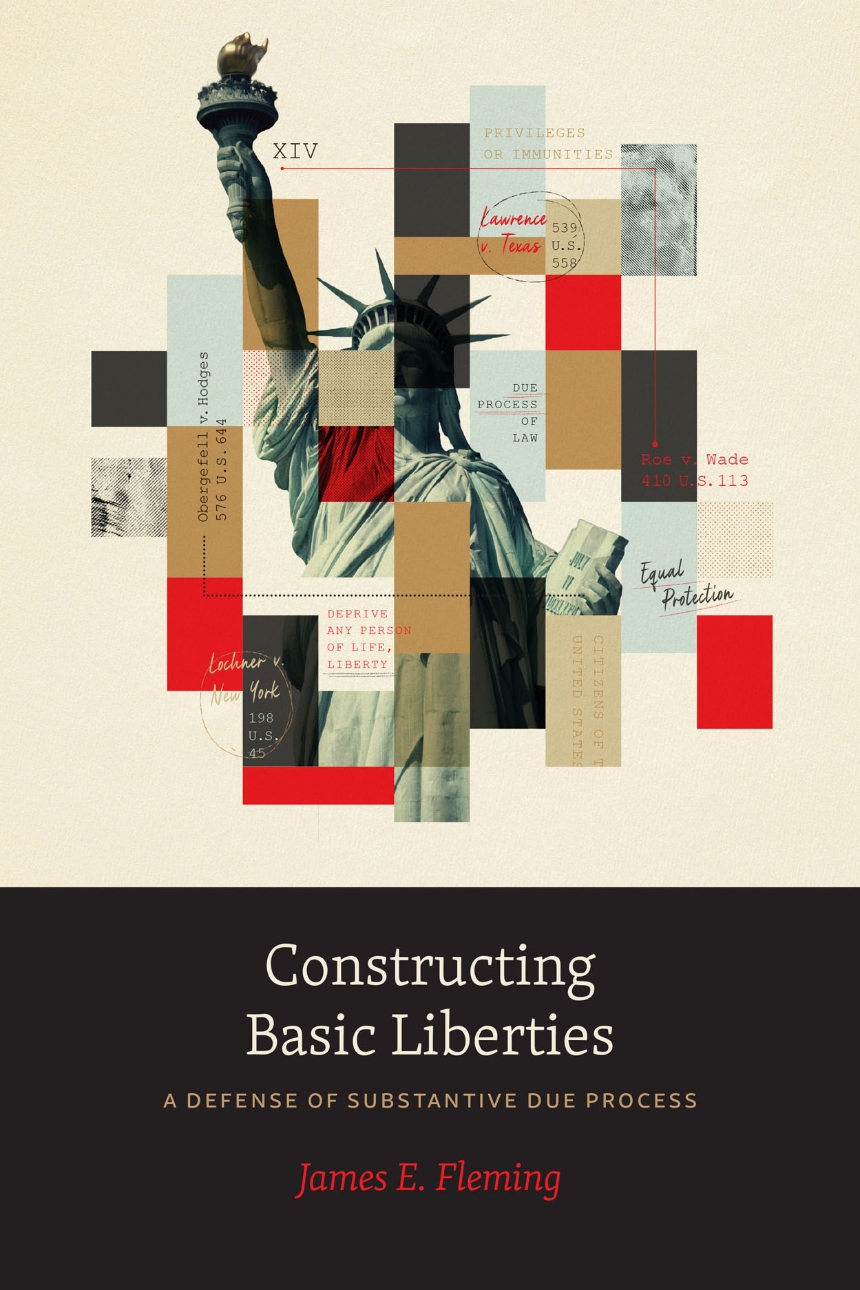
CONSTRUCTING BASIC LIBERTIES: A DEFENSE OF SUBSTANTIVE DUE PROCESS

Vol. 34 No. 04 (July 2024) pp. 40-43

CONSTRUCTING BASIC LIBERTIES: A DEFENSE OF SUBSTANTIVE DUE PROCESS, by James E. Fleming. Chicago: The University of Chicago Press, 2022. pp. 280. Paper $30.00. ISBN: 9780226821405. Cloth $95.00. ISBN: 9780226821399.

Reviewed by: Emily Zackin, Department of Political Science, Johns Hopkins University. Email: ezackin1@jhu.edu.

The Fourteenth Amendment bars states from depriving any person of life, liberty, or property without due process of law. Courts have interpreted this provision not only as a procedural protection but also as a guarantee of substantive rights, often rights that are not explicitly enumerated in the text of the Constitution. This way of reading the Fourteenth Amendment, known as substantive due process, has a bad reputation. In his important new book, Constructing Basic Liberties: A Defense of Substantive Due Process, James Fleming offers an earnest, thoughtful, and thought-provoking response to its many and varied critics.

Substantive Due Process, Fleming explains, has been haunted by the ghost of two notorious cases: Dredd Scott v. Sandford (1857) and Lochner v. New York (1905). Because Dredd Scott did not center on an interpretation of the liberty described in the Due Process Clause, Fleming denies that it is a substantive due process case and makes no attempt to defend it. However, he devotes a chapter to Lochner, arguing that the real problem with the majority’s opinion was not that it was grounded in a substantive due process argument about an unenumerated liberty (liberty of contract), but that economic liberties, like liberty of contract, do not actually require robust judicial protection. What the Lochner Court got wrong, on this account, is not that it protected a fundamental, unenumerated right through substantive due process, but that the particular right it protected was already safe from majoritarian attack. Though many conservatives are likely to disagree with the claim that economic liberties require little judicial protection, it is far from idiosyncratic. In fact, the Supreme Court also expressed this conviction in its creation and practice of rational basis review throughout the second half of the twentieth century.

Of course, vanquishing the ghost of Lochner cannot fully reassure those fearful of substantive due process. This specific case is haunting precisely because it points to a more general concern: that the doctrine of substantive due process empowers unelected and unaccountable judges to decide on a list of basic rights, with no way to ensure that the list is anything other than a judicial fabrication. In other words, the doctrine of substantive due process seems to endow the Supreme Court with an unbounded capacity to determine the meaning of the Constitution.

As I read it, the core claim of Constructing Basic Liberties is that judges can draw reasonable boundaries—they can define a set of unenumerated liberties without simply making things up. In fact, Fleming argues that after 1937, the Supreme Court performed

THE STORY OF CONSTITUTIONS: DISCOVERING THE WE IN US

Vol. 34 No. 04 (July 2024) pp. 36-40

THE STORY OF CONSTITUTIONS: DISCOVERING THE WE IN US, by Wim Voermans. Cambridge University Press, 2023. pp. 388. Cloth $90.00. ISBN: 9781009385046. Paper $29.99. ISBN: 9781009385084.

Reviewed by: Mark Rush. Department of Politics. Washington and Lee University. Email: rushm@wlu.edu.

The Story Of Constitutions is a series of reflections—meditations, perhaps—on why there are so many constitutions and why they seem to permeate every aspect of human history and civilization. This is a thoughtful work that will leave the reader pondering—frequently—over Voermans’ observations as he moves from and through sociology, anthropology, economics, and politics to offer observations about what makes constitutionalism so pervasive and what leads to constitutional success or demise.

He begins and ends with an acknowledgment that his observations are based in part on some obvious tensions. Humans began as nomadic, isolated beings. Over time, they settled, engaged in agriculture and urbanization, and laid the groundwork for the development of mass societies. In so doing they made it more difficult to foster and propagate the one, key element of any society—trust (p. 256). Fortunately, as he notes, communication technology has advanced in harmony with the growth of population (p. 343). Accordingly, humans have managed to manufacture and rearticulate new notions of trust that make it possible to develop constitutional norms that bind societies together despite their size and the corresponding anonymity that such scale imposes on interpersonal relationships (pp. 342-43).

In the introduction, Voermans sets forth a broad assessment of human nature and the evolution from nomadic to agrarian to urban society to comment on the social aspect of human nature and the extent to which the development of constitutions is a natural by-product of this. As humans began to settle and the size of human society grew from the family to the tribe to the nation, scale, complexity, and efficiency required the establishment of trust-based rules: “Constitutions largely consist of clever mixes of elements that facilitate the two pillars of social cooperation: trust and recognition” (p. 25). This led to the creation of “abstract institutions such as law” that “decrease uncertainty, anxiety and distrust—all of which stand in the way of large-scale human cooperation,” particularly with regard to commercial activity (p. 26). Hence, the book embarks on a voyage to explain how societies establish a collective, cooperative, shared identity that enables them to organize such abstract, trust-based rules.

A question that arises from the introduction and pervades the book concerns the genesis of the power to promulgate and empower those “abstract institutions” and enable them to generate

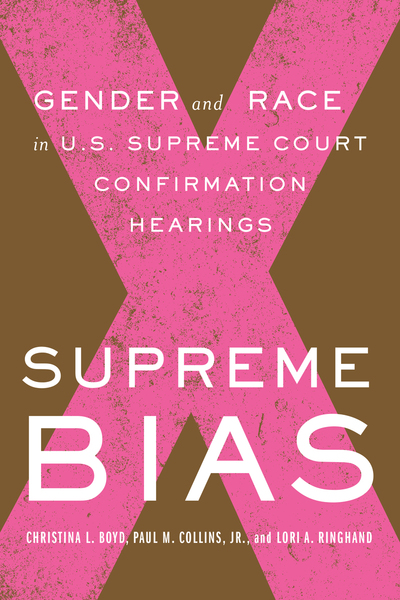
SUPREME BIAS: GENDER AND RACE IN U.S. SUPREME COURT CONFIRMATION HEARINGS

Vol. 34 No. 04 (July 2024) pp. 31-35

SUPREME BIAS: GENDER AND RACE IN U.S. SUPREME COURT CONFIRMATION HEARINGS, by Christina L. Boyd, Paul M. Collins, Jr., and Lori A. Ringhand. Stanford University Press, 2023. pp. 290. Cloth $120.00. ISBN: 9781503632691. Paper $30.00. ISBN: 9781503636880.

Reviewed by Elizabeth A. Lane. Department of Political Science. North Carolina State University. Email: elane3@ncsu.edu.

Supreme Court confirmation hearings are arguably the most salient job interviews imaginable. For the most part, nominees have very similar backgrounds—degrees from top law schools, impressive clerkships, and previous experiences as judges and advocates. These nominees, however, are not treated equally during Senate Judiciary Committee (SJC) hearings. Ample research attributes rapid-fire, difficult, or even rude questioning to ideological differences between senators and nominees (Farganis and Wedeking 2014; Schoenherr, Lane, and Armaly 2020). That, however, is not the full story.

In the timely new book, Supreme Bias: Gender and Race in U.S. Supreme Court Confirmation Hearings, authors Christina L. Boyd, Paul M. Collins, Jr., and Lori A. Ringhand push the field beyond partisan politics to consider other aspects that influence the dynamics of Supreme Court confirmation hearings. Specifically, they examine how gender and racial stereotypes, which color social interactions for so many, manifest in unequal treatment during these salient events.

One (of many) of the great things about this book is the background information provided in the first two chapters. Chapter 1 provides historical information on how the federal judiciary slowly diversified over time. It begins with stories of gender and racial diversity on the Supreme Court specifically, then moves to broader federal judicial diversity. Like other work on this topic, it focuses on Jimmy Carter’s presidency as a significant inflection point but, importantly, it provides a more comprehensive overview dating back to FDR’s presidency. The authors do so to make the point that, despite the fact that the federal judiciary is not a representative institution, descriptive diversity increases trust, confidence, and institutional legitimacy in significant ways.

The second chapter explains the Supreme Court confirmation process from vacancy to presidential selection, and the Senate’s role in the confirmation. It is a thorough, yet concise, historical overview of

THE RULE OF LAWS: A 4,000-YEAR QUEST TO ORDER THE WORLD

Vol. 34 No. 03 (May 2024) pp. 26-30

THE RULE OF LAWS: A 4,000-YEAR QUEST TO ORDER THE WORLD, Fernanda Pirie. New York: Basic Books, 2021. 570pp. Cloth $35.00. ISBN: 9781541617940. Ebook $19.99. ISBN 9781541617957.

Reviewed by Brian Z. Tamanaha. John S. Lehmann University Professor, Washington University in St. Louis. Email: btamanaha@wustl.edu.

The Rule of Laws is an impressive achievement. Oxford anthropology Professor Fernanda Pirie traces the historical trajectory of a number of great legal traditions of the world (mainly Mesopotamian law, Hindu law, Chinese law, Roman law, Jewish law, Islamic law, Civil law, Common law, and international law), while, along the way, providing detailed close-ups of many particular manifestations of law, including Irish law, Icelandic law, colonial law, Tibetan law, and more. Written in lively prose, Pirie treats readers to an unmatched historical tour of law around the globe over the past four millennia, drawing on a broad range of studies by historians, anthropologists, legal scholars, religious scholars, and other fields. No other work of world history covers law with such scope and depth. These qualities make The Rule of Law a commendable work of popular history that many readers will find informative and well-worth reading.

What is a terrific book for a popular audience, however, can be problematic for an academic audience. Popular audiences seek informative, entertaining, and readable treatments of a given subject. Academics demand that concepts be carefully defined and consistently applied, that empirical claims be backed by evidence, and that complex matters be treated with nuance. These respective objectives can be reconciled, but sometimes they clash. In several critical respects, it appears (to me) that academic concerns gave way to the demands of popular consumption.

The book is presented as a history of “law” and of “the rule of law.” In the Introduction, Pirie declares, “The rule of law [emphasis added] has a history, and we need to understand that history if we are to appreciate what law is [emphasis added], what it does, and how it can rule our world for better, as well as for worse” (p. 14). Her exploration purports to show that “law” and “the rule of law” emerged together in the distant past, gradually ascending and spreading over 4,000 years of human history. Although they coincide, law and the rule of law are not the same (Pirie emphasizes that China has had law for over two millennia, but not the rule of law). Thus, it is essential to understand each notion separately as well as how they relate to one another.

Scholars have long debated the meaning of “law” and have long debated the meaning of “the rule of law.” Pirie eschews these debates, giving readers no hint that each notion is the source of endless scholarly disagreement. Avoidance of theoretical complexity is a defensible strategy for a popular book,

THE EU AND CONSTITUTIONAL TIME: THE SIGNIFICANCE OF TIME IN CONSTITUTIONAL CHANGE

Vol. 34 No. 03 (May 2024) pp. 23-25

THE EU AND CONSTITUTIONAL TIME: THE SIGNIFICANCE OF TIME IN CONSTITUTIONAL CHANGE, Massimo Fichera. Edward Elgar Publishing, 2023. pp. 180. Cloth $115.00. ISBN: 9781789908992.

Reviewed by Nathan Griffith. Department of Political Science. Belmont University. Email: Nathan.Griffith@belmont.edu.

The EU and Constitutional Time is a normative and descriptive work, which is not a particularly felicitous combination. The book also suffers from a lack of clarity in organization and sometimes in substance, which makes it difficult to report on what exactly its thesis is, or how well the work supports it. This is especially problematic as normative rather than causal theory, since it makes it difficult to assess the reasoning (rather than evidence) that should support this vision of what should be over others.

The third chapter provides an excellent example to highlight both some of the excellent descriptive work and the visible seams in the organization. The title of the chapter is “The Rule of Law and Populism.” The first section of the chapter is “Recent Case Law on the Rule of Law/Democratic Backsliding and Comparison with the US Nullification Doctrine.” The six pages of that section give a clear, concise, and insightful account of the nullification dispute, from the Virginia and Kentucky Resolutions to Calhoun and Webster. Yet there is no definition of democratic backsliding, nor even an explicit use of the term until the penultimate sentence. There is no comparison of that constitutional debate (or even dispute) with recent EU case law or even recent events in the EU. Instead, the penultimate paragraph of the chapter begins with: “To a limited extent…some parallels can be drawn between the nullification crisis and the current state of affairs in the EU—as seen in Chapter 2” (p. 55). No parallels follow. The reference to the previous chapter does not help; that chapter was an abstract, theoretical discussion of how constitutions change through discursive constituent power. Nor is there a discussion of recent case law—though the section references cases involving Hungary and Poland, even the names of the cases appear only in the footnotes, and there is no further discussion of them or how they develop or illuminate case law.

The next section of the chapter is a discussion of populism. It is again in turns enlightening and disjointed or ineffective. The author presents a clear and concise summary of the critiques populism tends to make of liberal democracy, and relays (from Benjamin Arditi) perhaps the best metaphor for the role of populism in democracy, that of a drunken party guest who offends through both lack of manners and willingness to say what no one else will. But the author then repeats three more lists that mostly echo the first, without discussing how they relate or differ.

He claims that “none of the main tenets of populism are necessarily in contradiction with EU constitutionalism as such,” (p. 58) when the tenets involve the will of the people, where people is restricted to “authentic” people, whose sovereignty should not be circumscribed or circumvented. This rather stretches the meaning

THE GUN DILEMMA: HOW HISTORY IS AGAINST EXPANDED GUN RIGHTS

Vol. 34 No. 03 (May 2024) pp. 18-22

THE GUN DILEMMA: HOW HISTORY IS AGAINST EXPANDED GUN RIGHTS, Robert J. Spitzer. New York, NY: Oxford University Press, 2022. 200 pp. Hardcover. $32.99. ISBN: 978-0197643747.

Reviewed by Bruce Peabody, Department of Social Sciences and History, Fairleigh Dickinson University. Email: bpeabody@fdu.edu.

Robert Spitzer’s meticulously researched and engaging new book argues that many of today’s judges and Second Amendment activists have weaponized history. They deploy crabbed and incomplete accounts of our past to make the case that most gun laws depart from our civil liberties traditions, and are the innovative “product of modern American society” (p. 76). In six pithy chapters, Spitzer shows that the “opposite is true” (p. 76). From colonial times to the present, federal and state gun regulations emerged whenever new weapons or technology posed threats to public safety. Legislation restricting firearms is, therefore, popular, recurring, deeply rooted, and “as old as the country” (p. 19).

In Chapter One, the author makes the preliminary case that American history is replete with ongoing and substantively-varied gun regulations. In recent years, however, a new generation of ideologically-driven lawyers and judges have ignored this record and warped history to expand gun rights. Here Spitzer distinguishes “Gun Rights 1.0” (relatively modest efforts to establish an “individual right of citizens to own handguns for personal self-protection in the home”) from today’s “Gun Rights 2.0” (based on aggressive readings of the Second Amendment that challenge a wide range of existing gun laws and upset an established “equilibrium” between gun rights and safety)(pp. 2-3).

At the heart of Gun Rights 2.0 is the constitutional theory of originalism, which aspires to filter out judges’ “contemporary values and preferences” by identifying what the constitutional text meant at the time it was written. In the context of the Second Amendment, this entails “turning the clock back to an imaginary past” in which there were few legal gun restrictions and the individual right to bear arms was purportedly placed in an “exalted position” (p. 22). Spitzer identifies a number of “terminal flaws” (p. 22) associated with originalism, especially its reliance on “bad” history to cloak an ideological and “ends oriented” conservative jurisprudence (p. 20). Contrary to the claims of its adherents, originalism does not discipline its practitioners or constrain their activism, that is, their willingness to overturn existing legislation and disrupt established case law.

So far, these points will be mostly familiar to students of constitutional law and history. But the rest of The Gun Dilemma digs deeper,

RATIONING THE CONSTITUTION: HOW JUDICIAL CAPACITY SHAPES SUPREME COURT DECISION-MAKING

Vol. 34 No. 02 (March 2024) pp. 15-17

RATIONING THE CONSTITUTION: HOW JUDICIAL CAPACITY SHAPES SUPREME COURT DECISION-MAKING,Andrew Coan. Cambridge: Harvard University Press, 2019. pp. 265. Hardback $43.00. ISBN: 9780674986954.

Reviewed by Rachael Houston. Department of Political Science, Texas Christian University. Email: r.houston@tcu.edu.

In my undergraduate courses on Supreme Court judicial decision-making, I guide students through an in-depth exploration of the evolution of justices’ decision-making behavior. This educational journey commences with an introduction to the legal model, advances into the intricacies of the attitudinal model, and culminates with an in-depth examination of the strategic model. As we explore the strategic model, I underscore the pivotal role of external constraints, including the influence of public opinion and the pressures exerted by the Executive and Congress. I also shed light on internal constraints, illuminating the imperative for justices to secure support from their colleagues within the Court.

Andrew Coan's book smoothly becomes part of this academic exploration, intricately aligning with internal constraints, and simultaneously providing a constructive critique of our existing understanding of the strategic model. Coan introduces an innovative concept, “judicial capacity,” which highlights another layer of constraint that significantly influences how justices make decisions, thus shaping the outcomes of Court rulings. For undergraduate students, Coan’s book serves as an indispensable guide, presenting them with insightful case study scenarios, lucid explanations of judicial behavior models, historical and constitutional context, and real-world implications related to the concept of judicial capacity. It equips them with the essential tools to comprehend the motivations driving justices’ decision-making processes.

THE IMAGINED JUROR: HOW HYPOTHETICAL JURIES INFLUENCE FEDERAL PROSECUTORS

Vol. 34 No. 02 (March 2024) pp. 12-14

THE IMAGINED JUROR: HOW HYPOTHETICAL JURIES INFLUENCE FEDERAL PROSECUTORS, Anna Offitt. New York: New York University Press, 2022. 192pp. Cloth $89.00. ISBN: 978-1-4798-0853-3. Paper $30.00. ISBN: 978-1-4798-0854-0.

Reviewed by Anya Bernstein. University of Connecticut School of Law. Email: anya.bernstein@uconn.edu.

The right to a jury is enshrined in the United States Constitution, but these days juries are famously hard to find. A tiny fraction of lawsuits, whether civil or criminal, involve an actual jury (p. 28). Yet the idea of the jury continues to influence how lawsuits—even those that never get to a jury—proceed. Some of that influence is structural. For instance, a party seeking summary judgment in a civil lawsuit appeals to the abstract notion of a hypothetical jury: if a judge decides that no reasonable jury could find for the party’s adversary, there’s no point empaneling a jury at all. In that situation, the importance of the non-existent jury is, in some sense, written into legal standards, visible for all to see. But Anna Offit’s fascinating new study reveals that the idea of the jury plays an even more pervasive, less visible, role.

Offit, who is trained in both law and anthropology, conducted a long-term ethnography of federal prosecutors, putting in years as a participant observer in a U.S. Attorney’s office. Being socially embedded on an ongoing basis allowed her to observe the profession’s everyday: not just things she or her subjects already found notable, but the mundane interactions, the routine preparations, and the offhand comments that contribute to the flow of life on the job. Much of the evidence Offit brings to bear quotes from her many interviews and conversations, which clearly benefited from the familiarity she developed with her subjects and the trust they placed in her. Ethnography, as understood in anthropology, goes beyond short interactions into longer-term ongoing connections, creating social ties in which any given interview or conversation is embedded. The researcher continuously interacts with research subjects over time, taking part in their activities together. This double consciousness—as an insider participant but also as an outsider observer—can yield insights that are hard to achieve in other ways. It can give the researcher an intuitive, felt understanding of the logic behind her subjects’ practices, helping her see how particular choices or peculiar views make sense to those who enact them. Additionally, it can help the researcher notice patterns, practices, and conflicts that fly under even participants’ own radars (pp. 9-14). Offit returns throughout the book to discuss the ethnographic method and consider both its benefits and its limitations.

ACTUAL MALICE: CIVIL RIGHTS AND FREEDOM OF THE PRESS IN NEW YORK TIMES V. SULLIVAN

Vol. 34 No. 01 (January 2024) pp. 9-11

ACTUAL MALICE: CIVIL RIGHTS AND FREEDOM OF THE PRESS IN NEW YORK TIMES V. SULLIVAN, Samantha Barbas. Berkeley: University of California Press, 2023. 290 pp. Cloth $ 29.95. ISBN: 9780520385825.

Reviewed by Cary Federman., Department of Justice Studies. Montclair State University. Email: federmanc@montclair.edu.

In 1960, the New York Times published an advertisement, “Heed Their Rising Voices,” written by an ad hoc committee called the Committee to Defend Martin Luther King and the Struggle for Freedom in the South. Through the advertisement, the Committee sought to expose police misconduct that occurred during a sit-in at a lunch counter in Montgomery, Alabama. The advertisement, however, contained a number of falsehoods, and, by inference but not by name, it implied that the Commissioner of Public Safety in Montgomery, Lester Bruce (L.B.) Sullivan, was responsible. Sullivan sued for libel in state court and won a $500,000 award, “the largest libel verdict in the state’s history,” according to Samantha Barbas (p. 2). Both the press and civil rights organizations regarded Sullivan’s victory as a threat to the First Amendment. Civil rights organizations feared reprisals for any criticisms they may make against governmental officials. The press was concerned that other large-sum awards might follow, which would have a “chilling effect” on the freedom of the press. The scope of such awards would prevent journalists from investigating racial conflict in the South or public officials anywhere. Should the Alabama court’s ruling stand, Justice William Brennan wrote for a unanimous Court in New York Times v. Sullivan, the nation’s commitment to “uninhibited, robust, and wide-open” debate would collapse.

Samantha Barbas, a law professor at the University of Buffalo, and a well-regarded scholar of press and speech freedoms, has written a general history of New York Times v. Sullivan. The case lends itself to an interdisciplinary approach. The legal issues are complex, but the case began over an attempt to desegregate lunch counters; Sullivan’s trial was racially segregated; and to say that the trial judge had Confederate sympathies is to put it mildly. As Barbas demonstrates, it is impossible to separate the legal issues from the civil rights movement’s focus on desegregation, integration, and political equality.

Libel is the written defamation of character. There are four kinds: blasphemous, pertaining to religious institutions or persons; obscenity, relating to moral concerns; private, involving individuals; and seditious, concerning libel against the state or state officials. Sullivan is a private libel case involving the defamation of Sullivan’s character. But the Court treated the case as part seditious libel and part private libel. In other words, the decision holds that